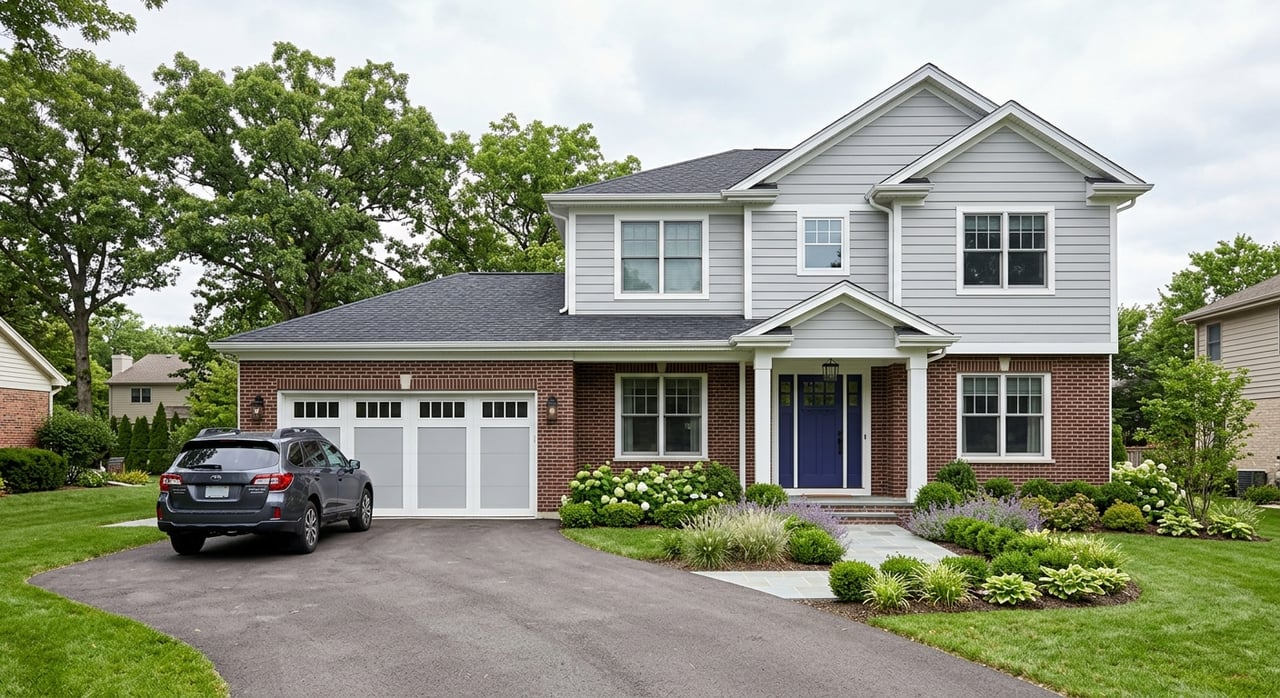
If you are thinking about buying a rental property in Clemson, the opportunity can look exciting at first glance. A major university, steady renter demand, and the appeal of long-term ownership all make this market worth a closer look. But in Clemson, the numbers only tell the full story when you pair them with local zoning, occupancy rules, permit requirements, and tax costs. Let’s dive in.
Why Clemson draws rental investors
Clemson is a renter-heavy market. According to U.S. Census data, owner-occupied housing makes up 34.3% of occupied units in the city, and the 2020 to 2024 median gross rent is $1,007. That tells you right away that renting plays a major role in the local housing mix.
A big reason is Clemson University. The university reported total enrollment of 29,545 in 2025, including 24,060 undergraduates and 5,485 graduate students. That large student population helps support off-campus demand, especially for upperclassmen, transfer students, graduate students, and other renters who want to live near campus.
Still, it is important not to oversimplify the tenant pool. Clemson University requires first-year and Bridge students to live on campus unless they live at home in Anderson, Pickens, or Oconee counties. That means an investment strategy built mainly around freshmen living off campus carries more risk than many buyers assume.
Clemson rents vary by property type
One of the biggest mistakes investors make is treating Clemson rents like a single number. They are not. Rent levels depend heavily on whether you are looking at a room rental, an apartment, a townhouse, or a detached house.
Current asking rents in Clemson show a wide spread. Zillow listings include 3-bedroom houses around $1,800 to $2,300, 4-bedroom houses around $2,095 to $3,200, a 2-bedroom apartment at $880 and up, and furnished room or townhouse listings as low as $400. In other words, product type matters a lot.
It also helps to understand that not all rent figures measure the same thing. Census data reports median gross rent, while Zillow’s Clemson rent figures are asking-rent estimates rather than closed lease comps. If you are underwriting a deal, you should avoid mixing those figures as if they mean the same thing.
Purchase prices can pressure cash flow
The reward side of Clemson investing starts to make sense when you look at demand. The risk side becomes clearer when you compare rents to home prices. Zillow reports an average home value in Clemson of $396,341 and a median list price of $481,267.
That price backdrop matters because many properties may be expensive to buy relative to what they can legally and realistically rent for. A house that looks attractive on paper may not produce strong monthly cash flow if the expected rent does not cover your full ownership costs. That is especially true when you add taxes, insurance, repairs, vacancy, management, and reserves.
For many investors, this is the key Clemson question: are you buying a property that can benefit from roommate-style rental economics, or are you buying a property priced like a primary residence but rented like a standard home? That difference can make or break the deal.
Legal occupancy can shape your income
In Clemson, legal occupancy is not a minor detail. It is one of the most important factors in your rental strategy. A home that seems ideal for three or four tenants may not actually be permitted for that use.
The city’s zoning table caps residential occupancy by district. Occupancy is limited to 2 in R-20 and R-12, 3 in R-7, and 4 in RM-1 and RM-2. For investors who plan to rent by the bedroom or target student households, that rule directly affects the income side of the equation.
There is another layer to watch. The code says occupancy in R-20, R-12, RM-1, and RM-2 depends on rental-permit renewal, and existing nonconforming occupancy can lapse if the permit is not renewed within 120 days after expiration. That means permit history matters, not just the number of bedrooms.
Rental permits and inspections matter
Clemson’s rental-housing ordinance applies to single-family houses, duplexes, and townhouses. The city requires rental houses to receive an annual inspection and permit. The city also issues an occupancy label that shows the maximum allowed number of occupants.
This requirement is important for both budgeting and due diligence. If you are buying an existing rental, you will want to confirm the permit status, inspection requirements, and occupancy label before you close. That step can help you avoid buying a property with an income plan that does not match local rules.
There is also a fee issue worth verifying. Clemson’s website lists a $125 rental-housing permit fee, while the online code text still shows a $100 annual permit fee. Because those public sources conflict, you should confirm the current fee and inspection details with Clemson Planning & Development as part of your review.
Short-term rental income has limits
Some buyers look at Clemson and think about football weekends, graduation, or short-term stays as a way to boost income. That strategy has more limits than many people expect. In Clemson, short-term rentals are regulated separately from traditional long-term rentals.
The city requires annual registration and a $100 registration fee for short-term rentals. There is also a 25-rental-day cap per calendar year, along with occupancy limits, parking rules, and a requirement that non-owner-occupied units have a person in charge within 75 miles of the city. If your numbers only work because of game-day or event income, that is a warning sign.
Property taxes deserve close attention
Taxes are another major Clemson-specific factor. In South Carolina, owner-occupied real property is assessed at 4%, while commercial and rental real property is assessed at 6%. That higher assessment ratio can materially change your annual carrying costs.
Clemson’s FY2026 tax overview notes that city millage was held at 95 mills in the adopted budget, with a 92.9-mill rollback rate after reassessment. The city’s example also shows that county, school, and city taxes all affect the final bill. Taxes are payable to Pickens County, not the city.
For investors, the takeaway is simple: do not estimate taxes using owner-occupied assumptions. A rental property in Clemson should be underwritten using the 6% assessment ratio and the local millage structure that applies to the property.
A realistic Clemson example
Here is a practical illustration from the research. At a $400,000 purchase price with 25% down, the loan amount would be $300,000. At a 6.37% 30-year fixed mortgage rate, monthly principal and interest would be about $2,127.
Using Clemson’s FY2026 combined millage example of 210.1 mills, annual property tax would be roughly $5,042 at the 6% assessment ratio, compared with about $3,362 at 4%, before credits or district-specific adjustments. That difference shows why a rental can look manageable at first and still underperform once you apply the correct tax treatment.
And that is before you add insurance, vacancy, maintenance, repairs, management, and capital reserves. In other words, a property can be a reasonable long-term hold and still be weak on monthly cash flow. The math has to work under conservative assumptions.
Where the reward can be strongest
Clemson can still offer real upside for investors who buy carefully. The strongest reward case often comes from properties that align with legal occupancy, have a layout that supports roommate demand, and sit in a price range where rents can better support ownership costs.
The local renter base is supported by Clemson University, and current whole-house asking rents can exceed $2,000 to $3,000 for the right product. When a property legally supports the intended occupancy and the rent structure fits the acquisition cost, the long-term hold case becomes much more compelling.
This is especially true for buyers who think beyond one leasing cycle. A well-bought property near a major university can benefit from recurring demand, but only if the rules and numbers support the plan from day one.
Where the risk is highest
The biggest risks in Clemson usually come from assumptions that are easy to miss. One common issue is assuming a property can house more tenants than zoning or permit history allows. Another is using asking rents from one property type to justify buying a very different property.
A third risk is relying on strategies that local rules narrow. If the deal only works because you assume strong freshman off-campus demand or heavy short-term rental income, your margin for error is much smaller. Clemson’s housing policies and short-term rental limits make those assumptions less reliable.
There is also interest-rate risk. The most recent Freddie Mac reading in the research showed a 30-year fixed mortgage average of 6.37% as of May 7, 2026. A conservative buyer should stress-test above that rate rather than assume the exact weekly average will hold.
How to evaluate a Clemson rental wisely
If you are considering a Clemson investment property, focus on a few questions before you get attached to a listing:
- What zoning district is the property in?
- What is the legal occupancy limit?
- Does the rental permit history support the intended use?
- What annual inspection or permit costs apply?
- Are you underwriting rents based on the correct property type?
- Have you modeled taxes using the 6% assessment ratio for rental property?
- Does the deal still work after vacancy, repairs, insurance, and reserves?
- If short-term rental income is part of the plan, does it comply with Clemson’s limits?
Those questions can help you separate a workable long-term investment from a property that only looks good at first glance.
Why local guidance matters
Clemson is not a market where you want to rely on broad assumptions. The details around occupancy, permits, and taxes can change the performance of a rental more than many buyers expect. That is why local knowledge matters so much when you are weighing risks and rewards.
If you want help evaluating property opportunities in Pickens County and the surrounding Upstate, Southern Real Estate and Development, Inc. brings a practical, local perspective to buying decisions. Whether you are comparing homes, land, or income-producing property, having the right information early can help you move forward with more confidence.
FAQs
What makes Clemson, South Carolina attractive for rental property investors?
- Clemson has a renter-heavy housing mix and demand tied to Clemson University, especially from upperclassmen, graduate students, transfer students, and other renters living off campus.
What is the biggest risk when buying a Clemson rental property?
- One of the biggest risks is assuming a property can legally support more occupants than local zoning and rental-permit rules allow.
How do Clemson occupancy rules affect rental income?
- Occupancy caps vary by zoning district, so the number of tenants you can legally house may limit the rent you can collect.
Are rental permits required for Clemson houses and townhouses?
- Yes. Clemson requires annual inspection and permitting for rental houses, including single-family houses, duplexes, and townhouses, and the city issues an occupancy label showing the maximum allowed occupants.
Can you use short-term rentals for Clemson game-day income?
- Clemson allows short-term rentals only under separate rules, including annual registration, a fee, occupancy limits, parking requirements, and a 25-rental-day cap each calendar year.
How are Clemson rental properties taxed differently from owner-occupied homes?
- In South Carolina, rental real property is assessed at 6% while owner-occupied real property is assessed at 4%, which can raise annual property taxes for investors.
What should you verify before buying a rental property in Clemson?
- You should confirm zoning, legal occupancy, rental-permit status, inspection requirements, likely rent by property type, and carrying costs including taxes, insurance, vacancy, and reserves.